TAKO Since 1979 – Electrical Conductivity Floor Testing for Safe and Compliant Work Environments

1. Introduction: Why Electrical Conductivity Floor Testing Matters
In modern industrial environments, electrostatic discharge (ESD) is more than a minor inconvenience—it is a serious operational risk. From semiconductor manufacturing to pharmaceutical cleanrooms, static electricity can damage sensitive components, corrupt data, ignite flammable materials, and disrupt production processes.
This is where Electrical conductivity floor testing plays a critical role. Conductive and static-dissipative flooring systems are installed to control electrostatic buildup, but installation alone does not guarantee long-term compliance. Regular verification ensures that flooring systems continue to perform according to international safety and quality standards.
At TAKO Since 1979, we understand that safety, compliance, and operational continuity depend on accurate and reliable testing procedures.
Table of Contents
2. What Is Electrical Conductivity Floor Testing?
Electrical conductivity floor testing is the process of measuring a flooring system’s ability to conduct or dissipate electrical charges safely to ground. The objective is to confirm that the floor meets specified resistance ranges defined by industry standards.
It typically involves measuring:
- Surface resistance
- Resistance-to-ground
- Resistance between two points
This testing determines whether the floor functions as conductive or static dissipative, depending on the required performance level.
Many facilities confuse conductivity with resistivity. While resistivity measures how strongly a material resists electric current, conductivity reflects how effectively it allows electrical charge to flow. Electrical conductivity floor testing focuses on ensuring that flooring systems fall within acceptable resistance thresholds to maintain ESD control.

3. Why Safe and Compliant Work Environments Require Conductive Flooring
Static electricity can build up quickly in controlled environments due to machinery, ESD standards in Malaysian material handling, and personnel movement. Without properly grounded flooring systems, this charge can discharge into sensitive electronics or flammable materials, causing damage or safety hazards.
Key reasons why Electrical conductivity floor testing is essential include:
Protection of Microelectronics and Circuit Boards
Electronic components are highly sensitive to even small electrostatic discharges. These discharges can cause immediate failure or hidden defects that reduce product reliability. Testing ensures flooring safely channels static charges to ground, protecting valuable equipment and preventing costly repairs or replacements.
Prevention of Fire Hazards in Flammable Environments
In industries handling flammable gases, liquids, or dust, static sparks can ignite materials, leading to fires or explosions. Regular testing confirms that conductive flooring maintains its ability to safely dissipate charges, minimizing these critical safety risks.
Reduction of Equipment Malfunction and Downtime
ESD can disrupt automated systems, sensors, and machinery, causing malfunctions or unexpected shutdowns. By verifying floor conductivity, facilities reduce the likelihood of operational interruptions, ensuring smoother production and avoiding financial losses.
Assurance of Regulatory and Audit Compliance
Many industries are required to meet strict ESD and safety standards. Scheduled Electrical conductivity floor testing produces documented proof of compliance, helping facilities pass audits, maintain certifications, and uphold quality standards.
Even minor electrostatic discharges can cause latent defects in products, sometimes surfacing weeks or months later. Consistent testing ensures these hidden risks are caught early, protecting both equipment and operational efficiency.
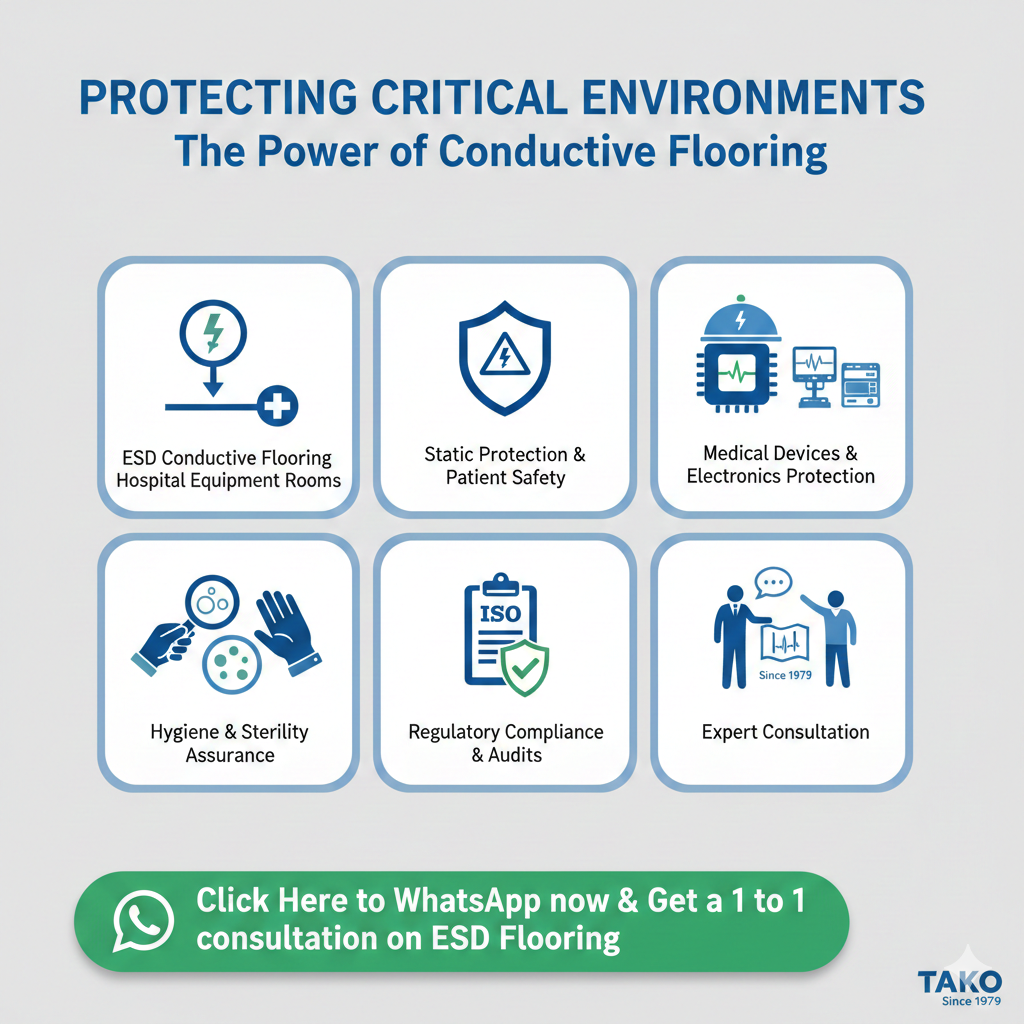
4. Industries That Require Electrical Conductivity Floor Testing
Several industries depend on controlled environments where static discharge must be minimized.
Electronics & Semiconductor Manufacturing
High-precision components are extremely sensitive to electrostatic discharge.
Data Centers
Static discharge can damage servers, storage systems, and networking infrastructure.
Pharmaceutical & Cleanrooms
Controlled static conditions help protect sensitive processes and reduce contamination risks.
Automotive Manufacturing
Modern vehicles contain complex electronic systems vulnerable to ESD damage.
Oil & Gas Facilities
Static sparks in flammable atmospheres can pose serious safety hazards.
In each of these sectors, https://tako.com.my/ Electrical conductivity floor testing supports operational reliability and safety compliance.
5. Key International Standards and Compliance Requirements
Compliance is not optional in regulated industries. Flooring systems must meet internationally recognized standards for electrostatic control.
Common standards include:
- ANSI/ESD S20.20
- IEC standards for electrostatic protection
- OSHA workplace safety requirements
These standards define acceptable resistance ranges and testing methodologies. Conducting Electrical conductivity floor testing according to standardized procedures ensures audit readiness and proper documentation.
Failure to comply can lead to penalties, failed inspections, or production shutdowns.
6. Flooring Materials Evaluated During Testing
Different flooring systems require regular verification to ensure they continue to perform as intended in controlling static electricity. Common types include:
- Conductive Epoxy Flooring – Widely used in manufacturing and electronics facilities, epoxy floors provide durable, seamless surfaces that channel static charges to grounding systems.
- Static Dissipative Resin Systems – Designed to slowly dissipate static charges, these floors balance conductivity with comfort and slip resistance, making them suitable for cleanrooms and laboratories.
- Conductive Vinyl Tiles – Flexible and cost-effective, these tiles are often installed in office, lab, or data center environments where moderate ESD protection is required.
- Rubber ESD Flooring – Provides shock absorption and ESD protection simultaneously, ideal for industrial workstations or areas with heavy foot traffic.
- Cleanroom-Grade Flooring Systems – Engineered for highly controlled environments, these floors resist contamination while maintaining strict conductivity requirements.
Each material type has specific resistance targets defined by industry standards. Over time, factors such as heavy wear, contamination, chemical exposure, or environmental conditions can reduce conductivity. Routine Electrical conductivity floor testing ensures that all flooring systems maintain their intended performance, providing reliable protection for sensitive equipment, operational continuity, and compliance with regulatory requirements.
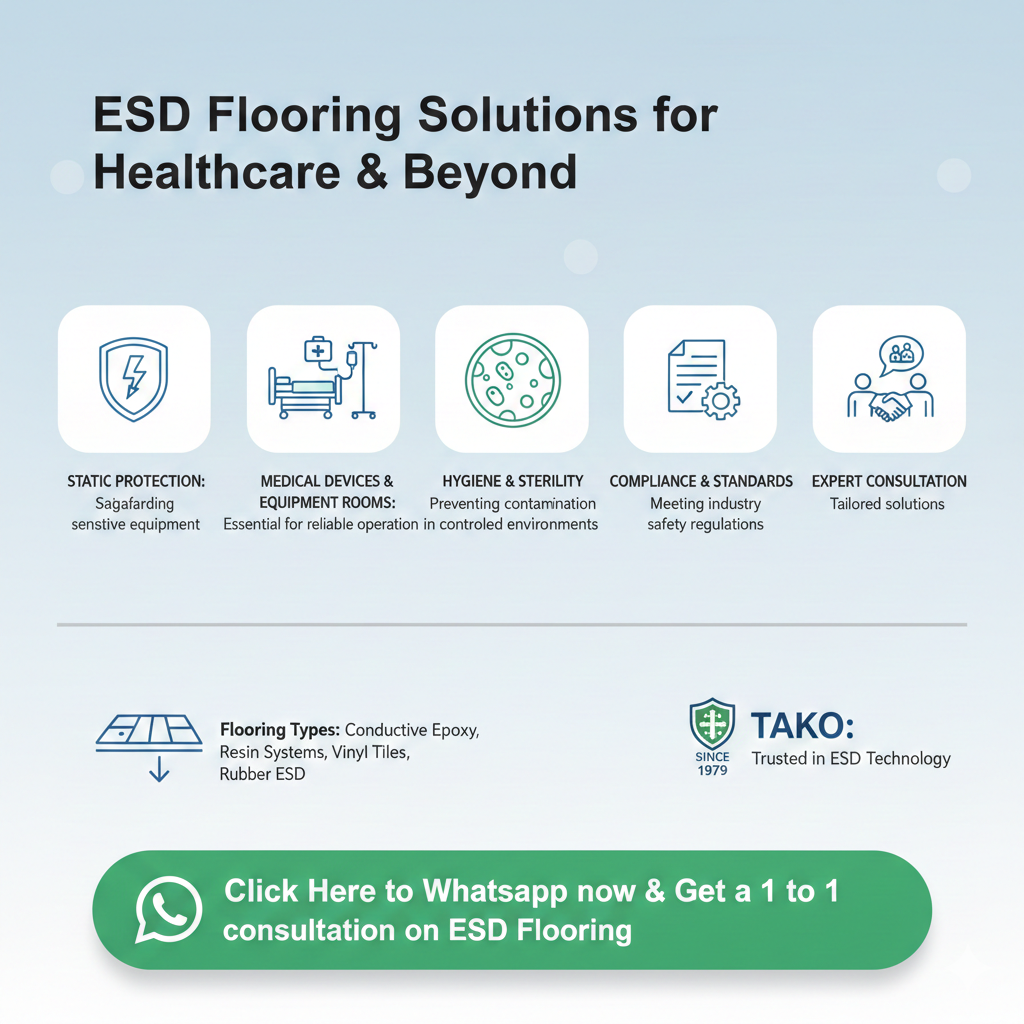
7. Electrical Conductivity Floor Testing Methods and Equipment
Testing procedures must be precise and standardized to produce reliable results.
Typical methods include:
Surface Resistance Testing
Measures resistance across the surface of the floor using electrodes placed at defined distances.
Resistance-to-Ground Testing
Determines how effectively static charges are transferred from the floor to ground.
Two-Point Resistance Testing
Measures resistance between two electrodes placed on the floor surface.
Specialized megohmmeters and calibrated electrodes are used during Electrical conductivity floor testing. Environmental conditions such as humidity and temperature are also controlled, as they can influence readings.
Accurate data collection and documentation are essential for compliance verification.
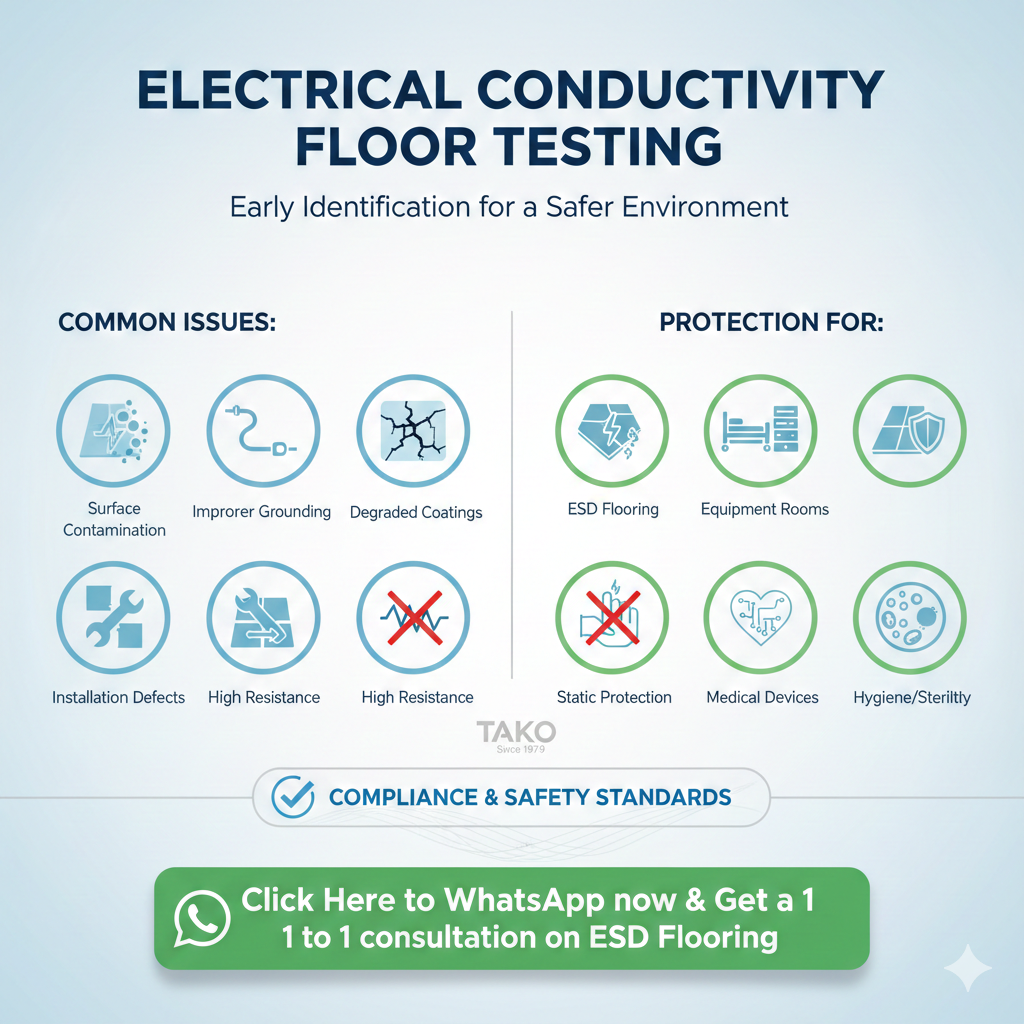
8. Common Issues Identified During Electrical Conductivity Floor Testing
Testing often reveals problems that are not visible to the naked eye.
Common findings include:
- Loss of conductivity due to surface contamination
- Improper grounding connections
- Degraded epoxy coatings
- High resistance values exceeding compliance limits
- Installation defects
Without regular Electrical conductivity floor testing, these issues may remain undetected until equipment failure or safety incidents occur.
Early identification allows corrective actions before major disruptions arise.
9. Recommended Testing Frequency and Maintenance Strategy
Testing frequency depends on the industry, operational intensity, and regulatory requirements.
Recommended intervals include:
- Immediately after installation
- Annually for standard industrial facilities
- Semi-annually or quarterly for high-risk environments
- After major repairs or renovations
Routine Electrical conductivity floor testing should be integrated into preventive maintenance programs. Facilities that adopt proactive testing strategies experience fewer compliance issues and lower long-term repair costs.
10. Risks of Neglecting Electrical Conductivity Floor Testing
Ignoring floor performance verification can have serious consequences.
Potential risks include:
- Damage to expensive equipment
- Production downtime
- Failed quality audits
- Regulatory fines
- Increased safety hazards
Static discharge incidents are often unpredictable. By implementing scheduled Electrical conductivity floor testing, organizations reduce operational uncertainty and improve workplace safety.
11. Why Choose TAKO Since 1979 for Electrical Conductivity Floor Testing
Experience and precision matter when evaluating flooring systems.
TAKO Since 1979 provides:
- Decades of industry expertise
- Standard-compliant testing procedures
- Calibrated measurement equipment
- Detailed compliance reporting
- Professional technical consultation
Our approach to Electrical conductivity floor testing emphasizes accuracy, documentation, and actionable recommendations. We help facilities not only meet compliance standards but also enhance long-term flooring performance.
With evolving industry regulations and increasing reliance on sensitive electronics, professional testing services ensure your facility remains protected.
12. Conclusion: Ensuring Sustainable Safety and Compliance
Modern industrial environments demand precision, reliability, and regulatory adherence. Flooring systems designed for electrostatic control must perform consistently over time.
Electrical conductivity floor testing verifies that performance standards are maintained, risks are minimized, and compliance requirements are met. Through systematic evaluation and proper documentation, organizations protect both their assets and workforce.
TAKO Since 1979 remains committed to supporting safe and compliant work environments through professional and reliable testing services.
13. Disclaimer
This article is provided for informational purposes only. Testing requirements may vary depending on industry regulations, facility design, environmental conditions, and regional compliance standards. Professional evaluation by qualified specialists is recommended before making decisions regarding flooring systems or compliance certifications. Always consult applicable regulatory bodies and certified testing professionals for site-specific guidance.
Frequently Asked Questions
What is the acceptable resistance range for conductive floors?
Acceptable resistance values depend on applicable standards such as ANSI/ESD S20.20. Typically, conductive floors fall within specific ohmic ranges defined for electrostatic control.
How long does Electrical conductivity floor testing take?
The duration depends on the facility size and number of test points. Small areas may require a few hours, while large industrial facilities may require a full day or more.
Can epoxy floors lose conductivity over time?
Yes. Wear, contamination, cleaning chemicals, and environmental exposure can affect performance, making periodic Electrical conductivity floor testing essential.
Is testing required for audit certification?
In many regulated industries, documented testing results are required to demonstrate compliance during audits.
Does humidity affect conductivity readings?
Yes. Environmental conditions such as humidity and temperature can influence test results, which is why controlled conditions are recommended.
Can non-compliant floors be repaired?
In many cases, corrective measures such as surface treatment, recoating, or grounding improvements can restore compliance.