TAKO SINCE 1979: Electronic static protection flooring: Complete Buyer’s Guide to Choosing the Best ESD Flooring System

Electronic static protection flooring is a specialized solution designed to control and safely dissipate electrostatic charges in sensitive environments. It creates a reliable path to ground, preventing static buildup that can damage equipment or disrupt operations.
With over four decades of expertise, TAKO SINCE 1979 provides high-performance systems known for durability, consistent conductivity, and full compliance with international ESD standards—making it a trusted partner for industrial and commercial projects.
Backed by advanced materials and strict quality control, TAKO’s solutions are engineered for long-term performance with minimal maintenance. This ensures that electronic static protection flooring is not just a safety feature, but a smart investment that reduces downtime and protects valuable assets.
In industries such as electronics manufacturing, cleanrooms, and data centers, ESD control is critical. Without proper protection, static discharge can cause equipment failure, data loss, safety hazards, and costly production delays. These risks make choosing the right electronic static protection flooring system essential for operational continuity.
This guide is designed for facility managers, engineers, and procurement teams seeking reliable, compliant, and cost-effective flooring solutions for modern industrial environments.
Table of Contents
2. What Is Electronic Static Protection Flooring?
Electronic static protection flooring is a specialized flooring system designed to control, manage, and safely dissipate electrostatic charges in environments where static electricity can cause serious damage. Its core function is to prevent the buildup of static electricity by providing a controlled path that directs charges safely into the ground, protecting sensitive equipment and ensuring operational safety. In industries such as electronics manufacturing and cleanrooms, electronic static protection flooring plays a critical role in maintaining performance and compliance.
The system works by using conductive or dissipative materials that regulate how quickly electrical charges move across the surface and into a grounding point. This controlled dissipation reduces the risk of sudden electrostatic discharge (ESD), which can damage components or disrupt processes. High-quality electronic static protection flooring ensures consistent electrical resistance and long-term reliability.
There are key differences between flooring types. Conductive flooring allows faster charge transfer, while static dissipative flooring controls the flow more gradually. Anti-static flooring, on the other hand, reduces charge generation but does not fully dissipate it. These systems must comply with recognized standards such as ANSI/ESD S20.20 and IEC 61340 to ensure safety and effectiveness.

3. Why ESD Flooring Is Essential for Industrial and Commercial Environments
In today’s high-tech and precision-driven industries, controlling electrostatic discharge is critical to maintaining safety, product quality, and operational efficiency. Environments such as electronics manufacturing, cleanrooms, pharmaceuticals, data centers, and automotive or aerospace facilities all rely on stable conditions where even minor static buildup can cause major disruptions. This is where electronic static protection flooring becomes essential, as it provides a controlled solution to manage and dissipate static electricity effectively.
Without proper ESD protection in place, businesses face serious consequences. Electrostatic discharge can lead to immediate equipment failure, damage sensitive electronic components, and result in permanent data loss. In more hazardous environments, it can even trigger fire or explosion risks, especially where flammable materials or gases are present. Implementing electronic static protection flooring helps eliminate these risks by ensuring continuous and safe dissipation of electrical charges.
From a financial perspective, the cost of damage caused by ESD incidents can far exceed the initial investment in preventive solutions. Downtime, repairs, and product loss can quickly add up. By installing electronic static protection flooring, organizations not only enhance safety but also achieve long-term cost savings and a strong return on investment through reduced risk and improved operational reliability.
4. Types of Electronic Static Protection Flooring Systems
4.1 ESD Epoxy Flooring
ESD epoxy is a seamless, durable solution widely used in industrial environments. It offers excellent chemical resistance, high load-bearing capacity, and long-term conductivity. Electronic static protection flooring in epoxy form is ideal for factories, laboratories, and cleanrooms where reliability and hygiene are critical.
4.2 ESD Vinyl (PVC) Flooring
ESD vinyl flooring is known for its consistency, affordability, and ease of maintenance. It provides stable electrical performance over time and is commonly used in electronics manufacturing and assembly areas. This type of electronic static protection flooring is also valued for its durability and design flexibility.
4.3 Rubber ESD Flooring
Rubber flooring offers superior comfort and flexibility, making it suitable for areas where employees stand for long periods. It provides effective static control while reducing fatigue, making electronic static protection flooring in rubber form ideal for control rooms and technical workspaces.
4.4 ESD Carpet Tiles
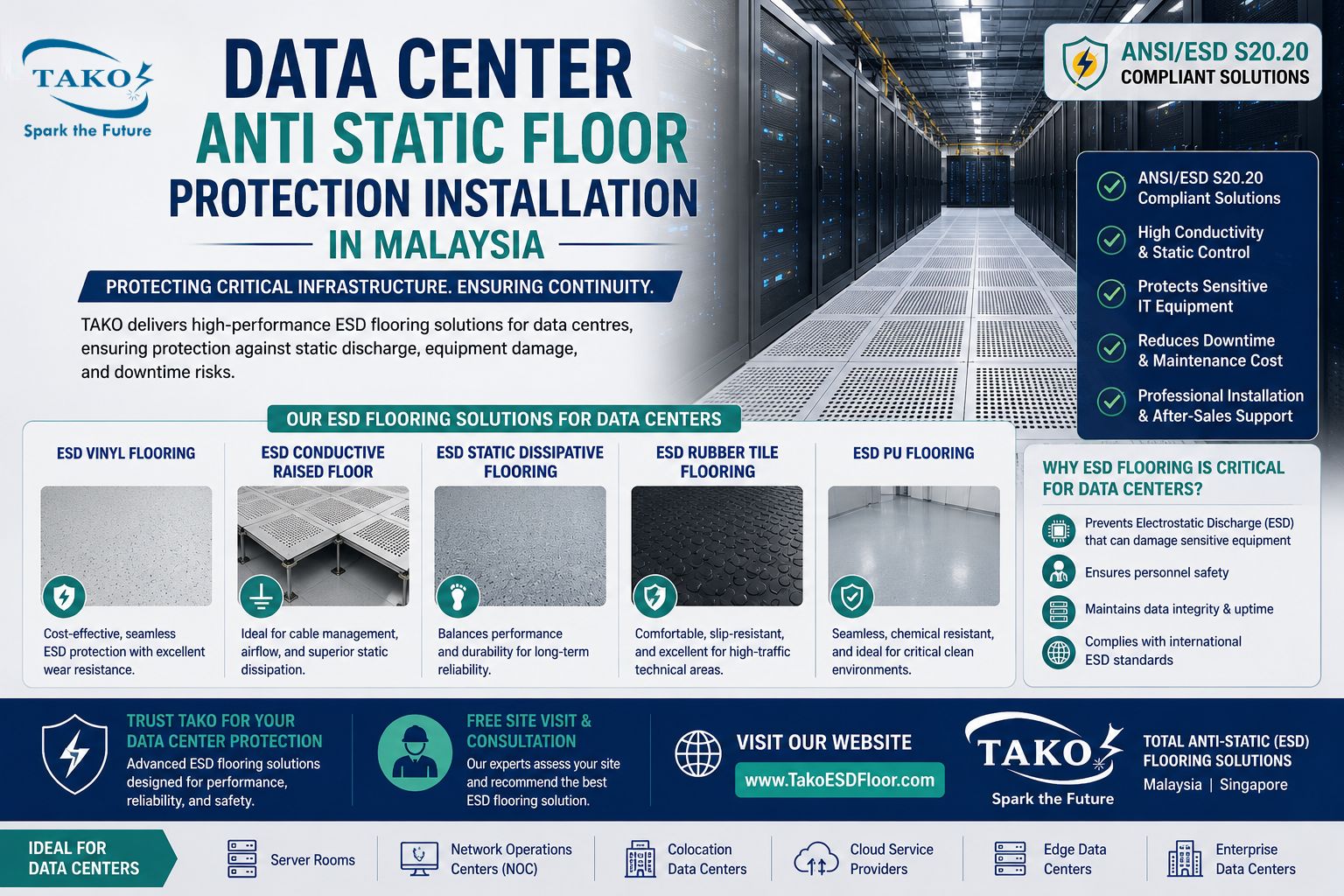
ESD carpet tiles are commonly used in offices and data centers. They combine static control with aesthetic appeal and are easy to replace, offering a practical electronic static protection flooring option for low to medium-risk environments.
4.5 ESD Floor Coatings & Sealants
Coatings and sealants are applied over existing floors to provide ESD properties. They are cost-effective for upgrades but may not match the durability of full systems, depending on usage conditions.

5. Key Factors to Consider Before Buying
When selecting electronic static protection flooring, several critical factors must be considered to ensure both safety and long-term performance. First, electrical resistance requirements are essential, as the flooring must provide the right level of conductivity or dissipation to meet industry-specific ESD standards. Compliance with recognized standards, such as ANSI/ESD S20.20 and IEC 61340, ensures that the flooring system will perform reliably and meet regulatory expectations.
Durability and load-bearing capacity are also important, particularly in high-traffic industrial environments. Flooring must withstand heavy equipment, constant foot traffic, and potential chemical exposure. Chemical and abrasion resistance further determine the longevity of the system, especially in manufacturing or laboratory settings where spills or mechanical wear are common.
Installation method and downtime should be factored in, as some systems require more preparation and curing time than others. Maintenance requirements and environmental conditions, including temperature and humidity, influence performance and lifecycle. Finally, budget considerations must include not only initial costs but also long-term maintenance and replacement. Choosing the right electronic static protection flooring balances safety, performance, and cost efficiency, ensuring a strong return on investment.
Proper selection guarantees that electronic static protection flooring protects assets and supports operational continuity.
6. ESD Standards and Compliance Requirements
Ensuring compliance with ESD standards is critical when choosing electronic static protection flooring. These standards define the requirements for electrical resistance, grounding, and performance to prevent electrostatic discharge in sensitive environments.
Two of the most widely recognized standards are ANSI/ESD S20.20 and IEC 61340. ANSI/ESD S20.20 is a comprehensive standard widely adopted in North America that outlines procedures for ESD control programs in manufacturing and technical environments. IEC 61340 provides an international benchmark for testing, installation, and performance of ESD flooring systems, ensuring consistent global compliance.
Proper testing and certification are essential to verify that a flooring system meets these standards. Electrical resistance tests, grounding checks, and periodic inspections help confirm that the system consistently dissipates static electricity as intended. Certification from recognized bodies not only validates performance but also demonstrates commitment to safety and quality.
Working with certified suppliers is equally important. Trusted suppliers like TAKO SINCE 1979 ensure that all products are tested, documented, and compliant with relevant standards. This guarantees that electronic static protection flooring delivers reliable performance, protects sensitive equipment, and supports operational continuity in industrial and commercial environments.
Compliance and certification provide both safety and confidence for long-term investment in ESD flooring solutions.

7. Installation Process: What to Expect
Installing electronic static protection flooring requires careful planning and precise execution to ensure optimal performance and long-term reliability. The process begins with thorough surface preparation, which may include cleaning, leveling, and repairing the subfloor. A properly prepared surface ensures that the flooring adheres correctly and maintains consistent electrical conductivity.
The installation typically involves applying a primer, followed by a conductive or static-dissipative layer, and finishing with a protective topcoat. Each layer must be applied uniformly to achieve the desired resistance levels and durability. Curing times vary depending on the material but usually range from several hours to a few days, during which the floor must remain undisturbed.
Common installation mistakes—such as uneven application, insufficient curing, or neglecting grounding connections—can compromise the effectiveness of electronic static protection flooring and increase maintenance costs. Professional installation is crucial, as experienced contractors ensure precise layer thickness, proper grounding, and compliance with ESD standards.
By relying on certified installers and following established procedures, businesses can maximize the safety, reliability, and lifespan of their electronic static protection flooring, protecting sensitive equipment and supporting uninterrupted operations.
8. Maintenance and Long-Term Performance
Maintaining electronic static protection flooring is essential to ensure consistent ESD control and extend the lifespan of the system. Regular cleaning is a key factor in preserving both performance and appearance.
Best practices include using ESD-safe cleaning agents and tools that do not leave residues or damage the conductive properties of the flooring. Dry mopping or vacuuming with anti-static equipment can remove dust and debris without compromising electrical resistance.
Choosing the right products and methods is critical. Neutral-pH cleaners or specialized ESD cleaning solutions are recommended, while harsh chemicals or abrasive materials should be avoided. Floors should be cleaned according to manufacturer guidelines, with high-traffic areas receiving more frequent attention.
Routine testing and monitoring are equally important. Periodic resistance measurements and grounding checks help ensure the flooring continues to meet ANSI/ESD and IEC standards. Any irregularities detected early can prevent costly damage to sensitive equipment.
Additional measures to extend the life of electronic static protection flooring include protecting high-traffic zones with mats, minimizing heavy impact, and promptly addressing spills or surface damage.
By following these maintenance strategies, organizations can maximize both the reliability and cost-effectiveness of their electronic static protection flooring, ensuring safety, compliance, and operational continuity for years to come.

9. Cost Breakdown and ROI Analysis
Investing in electronic static protection flooring requires a clear understanding of both upfront and long-term costs to ensure maximum return on investment. Initial expenses include the cost of materials and professional installation. Prices vary depending on the type of flooring, such as ESD epoxy, vinyl, rubber, or carpet tiles, with epoxy typically being more expensive due to its durability and seamless finish. Installation complexity, surface preparation, and curing time also influence the total upfront cost.
Long-term maintenance costs should be factored into the overall budget. High-quality flooring like ESD epoxy or certified vinyl often requires minimal upkeep, whereas other types may need more frequent cleaning, inspection, or repairs. Evaluating costs by flooring type helps businesses choose a solution that balances performance, durability, and budget.
The true value of electronic static protection flooring lies in its ability to prevent costly equipment damage, data loss, and production downtime. By reducing the risk of ESD incidents, companies can avoid expensive repairs and operational interruptions, resulting in a strong ROI. When planned and installed correctly, ESD flooring is not just a safety measure but a strategic investment in operational efficiency, asset protection, and long-term savings.
10. Common Mistakes Buyers Should Avoid
When investing in electronic static protection flooring, buyers often make errors that can compromise safety, performance, and long-term value. One common mistake is choosing the wrong resistance range. Flooring must meet specific electrical requirements for the intended environment; using a floor that is too conductive or too dissipative can increase the risk of equipment damage or operational disruption.
Ignoring compliance standards is another frequent oversight. Flooring that does not meet ANSI/ESD S20.20 or IEC 61340 standards may fail to provide adequate protection, leaving sensitive equipment and processes vulnerable to static discharge.
Poor installation practices can also reduce effectiveness. Uneven application, improper grounding, or insufficient curing time can undermine the performance of even the highest-quality materials. Overlooking maintenance requirements further compounds the risk, as dirt, spills, or wear can alter electrical resistance over time.
Finally, selecting flooring based on price alone is a costly mistake. Low-cost options may save upfront, but they often require frequent replacement or fail to provide reliable protection. Choosing certified suppliers and considering long-term durability ensures that electronic static protection flooring delivers safety, compliance, and strong ROI for years to come.

11. How to Choose the Right Supplier
Selecting the right supplier is critical when investing in electronic static protection flooring to ensure reliability, compliance, and long-term performance. A reputable supplier should have proven experience in the industry, backed by certifications that demonstrate adherence to ESD standards such as ANSI/ESD S20.20 and IEC 61340. Certifications provide assurance that the products meet strict quality and safety requirements.
Product testing and thorough documentation are essential. Buyers should look for suppliers who can provide detailed test reports on electrical resistance, durability, and chemical resistance. This transparency ensures that the electronic static protection flooring you select has been rigorously evaluated and will perform as expected in your specific environment.
Examining case studies and past projects can help gauge a supplier’s expertise. Real-world examples of installations in similar industries demonstrate their ability to handle complex projects and deliver consistent results.
Warranty and after-sales support are also key considerations. Reliable suppliers offer comprehensive warranties covering materials and installation, along with responsive customer service for maintenance guidance, troubleshooting, and replacements if needed.
By prioritizing experience, certifications, testing, documented results, and strong support, businesses can confidently choose a supplier that ensures their electronic static protection flooring provides optimal safety, compliance, and return on investment over the long term.
12. Case Study / Real-World Applications (E-E-A-T Boost)
A leading electronics manufacturing facility recently upgraded its production area with electronic static protection flooring to address recurring equipment failures caused by electrostatic discharge (ESD). Before the installation, the facility experienced frequent component damage, production delays, and costly repairs, highlighting the critical need for a reliable ESD solution.
TAKO SINCE 1979 was selected for the project due to its decades of expertise and certified, high-performance flooring systems. The installation included a seamless ESD epoxy flooring with precise grounding connections and adherence to ANSI/ESD S20.20 and IEC 61340 standards. The project team ensured proper surface preparation, professional application, and thorough post-installation testing to guarantee consistent conductivity and durability.
Following the upgrade, measurable improvements were immediately observed. Equipment failure rates decreased by over 80%, while production downtime related to static discharge incidents was virtually eliminated. Maintenance requirements also dropped due to the floor’s seamless surface and chemical resistance. Over the first year, the facility achieved significant cost savings, not only in equipment repair but also in operational efficiency and reduced product scrap.
Several key lessons emerged from this project. First, investing in certified electronic static protection flooring provides both safety and a strong return on investment. Second, professional installation and adherence to ESD standards are critical to achieving long-term performance. Finally, routine monitoring and maintenance help preserve the flooring’s effectiveness and maximize operational reliability. This real-world example underscores the value of high-quality ESD flooring in industrial and commercial environments.
14. Conclusion
Choosing the right electronic static protection flooring is essential for protecting sensitive equipment, ensuring operational continuity, and achieving long-term cost savings. Key considerations include electrical resistance, compliance with ANSI/ESD and IEC standards, durability, maintenance requirements, and selecting a certified supplier with proven expertise. Proper installation and routine monitoring further enhance performance and lifespan.
Investing in a high-quality ESD flooring system is not just a safety measure—it is a strategic decision that delivers measurable ROI through reduced downtime, equipment protection, and operational efficiency.
Take the next step to secure your facility: request a quote, consult with our experts, or download technical specifications from TAKO SINCE 1979 to find the ideal flooring solution tailored to your industrial or commercial needs.
What is electronic static protection flooring?
It is a flooring system designed to safely dissipate static electricity and protect sensitive equipment in industrial and commercial environments.
How long does ESD flooring last?
With proper installation and maintenance, high-quality ESD flooring can last 10–20 years depending on traffic and usage.
Can ESD flooring be installed over existing floors?
Yes, coatings or sealants can upgrade existing floors, but full replacement may be required for maximum durability and compliance.
What industries need ESD flooring?
Common industries include electronics manufacturing, cleanrooms, data centers, pharmaceuticals, automotive, and aerospace.